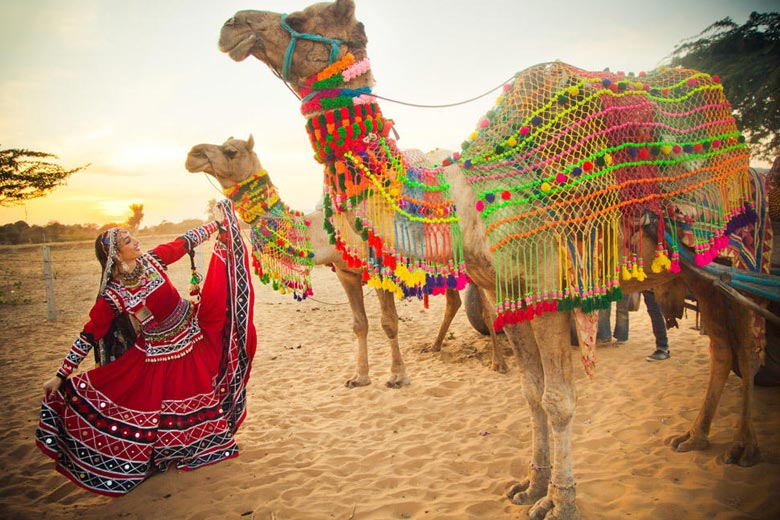
It can be difficult to put down the history and culture of Rajasthan in a few short sentences. There is no corner of the state that has not witnessed the clarion call to a great battle, seen the blooming of a romance, or felt the tragedy that comes with war and natural disasters. The best way to soak in the splendors of the state is to understand how the past has shaped the present. An experienced travel guide can explain the nuances of the customs, dresses, songs, crafts, and monuments that you will see, touch, or hear during your trip to this land of sand dunes and colors.
History
The region was dominated by independent kings and chieftains in the early stage of its recorded history. Though the great Indian epics such as the Ramayana and Mahabharata do mention some of the sites of pilgrimages in Rajasthan, not much is known about the region before the Gupta rule. Once the Maurya dynasty fell in 400 AD, there was chaos as local warlords fought each other over territory.
The forefathers of the Rajputs established their rule over the land. The sixth century witnessed the emergence of the Sisodia dynasty. Apart from the Sisodias, many smaller clans from other parts of India settled in Rajasthan. They include the Kachhwaha, Bhatis, and Suryavansa.
Some of the most stunning forts and monuments in the country were built by them of course, the romance and passion that is so much a part of Rajasthan’s culture cannot be detailed through a dry account of what every child in India reads in schoolbooks. It is only when you visit the monuments and the palaces that you begin to relate to the various players who shaped the past (and in many ways, the present) of the Rajasthanis.
Listen to the story of Queen Padmini, one of the most beautiful women of her times, so desired by Allaudin Khilji that he sacked and raided her kingdom to carry her off; whether or not he succeeded is a story for another day. While most textbooks mention Maharana Pratap, it is only when you visit the sites of his brave exploits that you will begin to understand why he is regarded as the greatest of all Rajput rulers.
Culture
By now you have probably gotten some idea of the romance that Rajasthan is. Once you visit the state, you realize that it is also a land of incredible warmth and generosity. No monochromes here; the colors of the rainbow are everywhere. Whether the brightly woven carpets made by rural weavers, or the glittering mirrorwork on the skirts and blouses of women, or the festivals such as Teej that celebrate the spirit of spring, there is not a dull shade in the multihued palette of this state.
The Ghoomar is a dance where the women twirl and sashay in their bright skirts to the tune of the sarangi and dholak, instruments typically Rajasthani in their ingenuity and global in their appeal. The traditional artists are famous for their skill in creating leather, wood, and metal items, as well as dyeing fabrics.
Cuisine
Rajasthan is known for its rich culinary traditions as well. The best part about eating out in Rajasthan is that you have choices galore. If you are vegetarian, then try the Marwari and Jain cuisines that will not only allow you to stick to a strictly plant-based diet, but also add a spicy tang to an otherwise cold winter evening. For non vegetarians, besides the usual mutton and poultry preparations, there are unusual dishes such as “khud khargosh”, literally, rabbit in a pit.
Rajasthan is more than just a land, it is a place that helps you understand yourself as you undertake a journey into its past and begin to recognize what molded its present – and will continue to influence its future. Rajasthan Tour is the best way to see this beautiful & amazing land.
 TRIP RADAR